
Creative Inspiration
Wabi-Sabi: finding beauty in the imperfect
6 min read
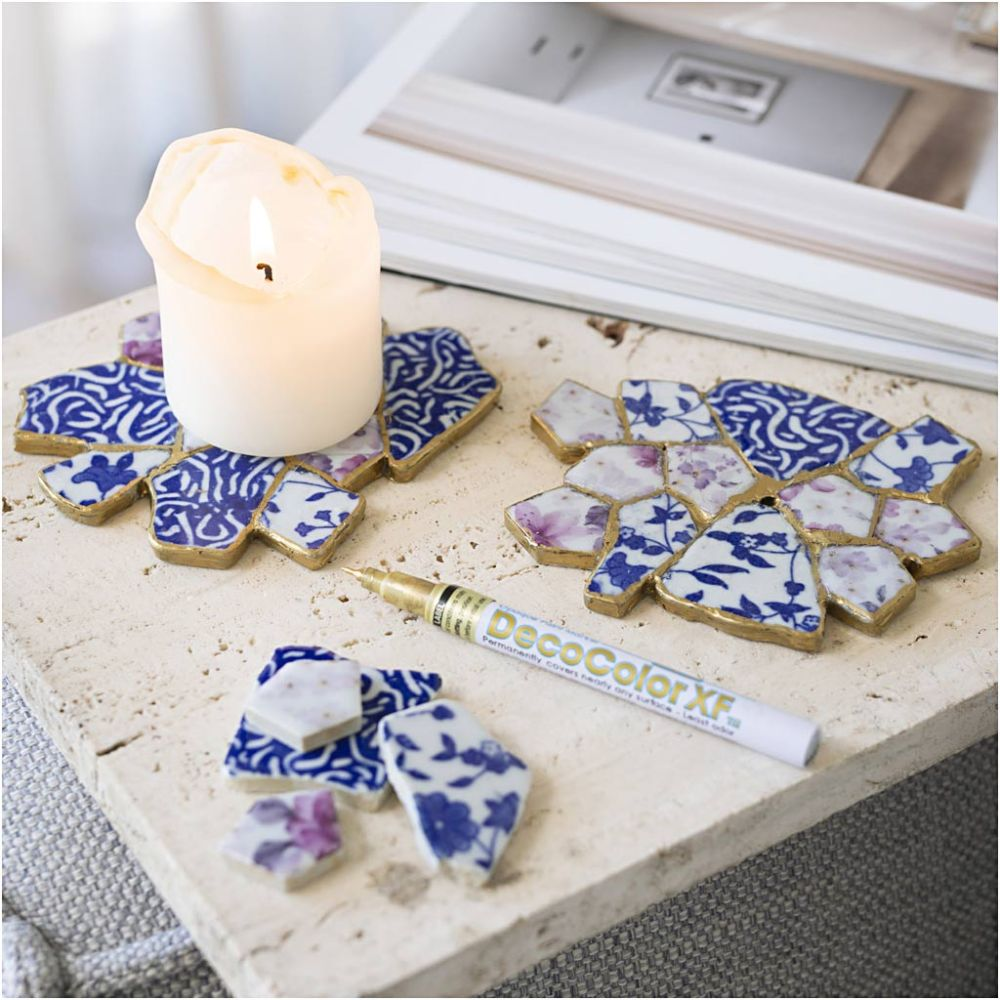
Wabi-sabi is the Japanese worldview that finds beauty in things that are imperfect, impermanent and incomplete. Translated into a home, it's the cracked cup you keep, the linen that wrinkles, the wood that wears, and — most explicitly — the broken bowl repaired with gold.
Three principles that translate to making
Asymmetry over symmetry: a vase that's slightly off-round is more alive than one that's perfect. Restraint over abundance: three rough ceramic pieces on a shelf beat twelve glossy ones. Visible history over flawless finish: a seam, a crack, a sanded edge tells you a hand was here.
A palette that ages well
Bone, raw plaster, terracotta, smoked oak, soft moss, deep indigo. Add metal sparingly — brushed brass or muted gold leaf. The palette is meant to feel like a riverbank, not a paint chip card.
Bringing it in through making
Kintsugi kits to mend a broken cup with gold seams. Self-hardening clay for asymmetric vessels. Linen embroidery in muted threads. Soy wax candles poured into bone-coloured bowls. Each of these objects, made by hand and kept on display, slowly shifts a room from styled to lived-in.
Pleasure, the saying goes, is in the cracks.