
Creative Inspiration
Kintsugi: the art of golden repair
7 min read
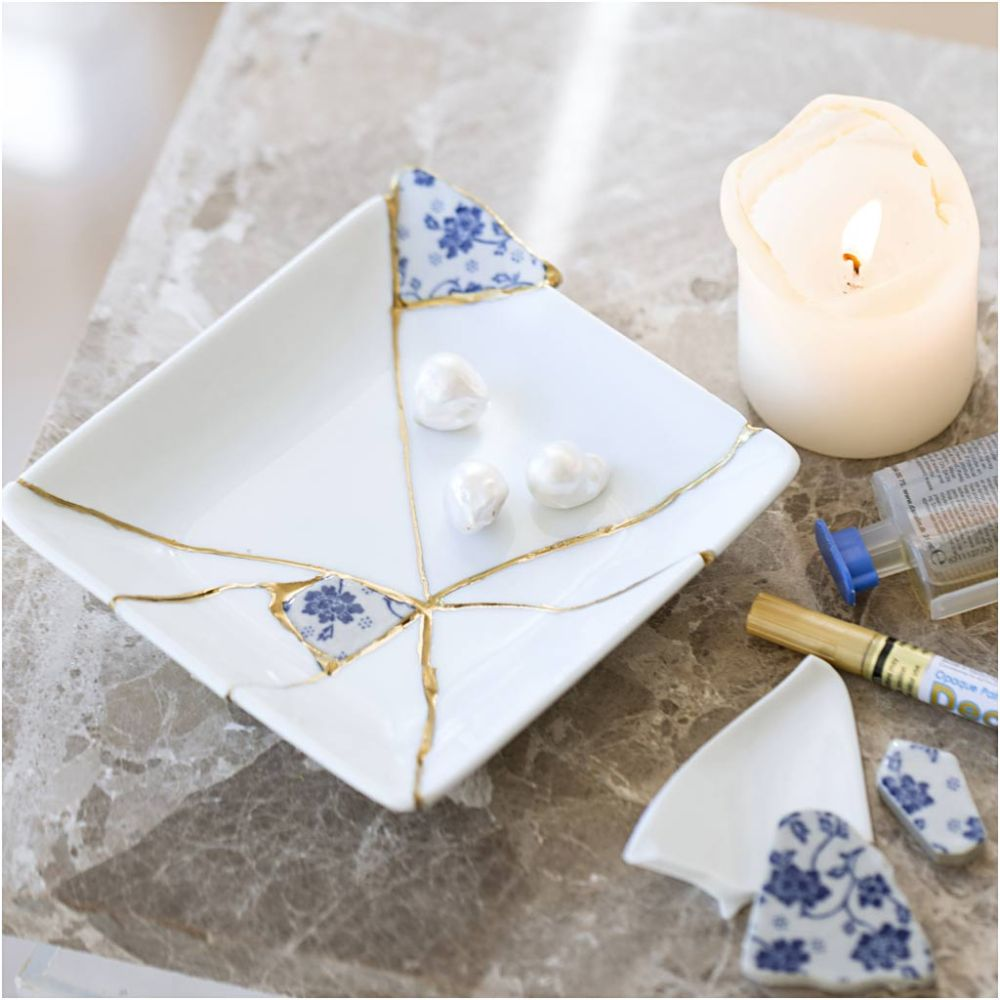
Kintsugi — literally 'golden joinery' — is the Japanese craft of repairing broken pottery with lacquer mixed with powdered gold. The idea is radical and simple: the break is part of the object's history, and the repair should celebrate it, not hide it.
A 500-year-old answer to a modern problem
The legend traces back to the 15th-century shogun Ashikaga Yoshimasa, who broke a favourite tea bowl, sent it to China to be mended, and was so disappointed by the ugly metal staples that came back that Japanese craftsmen invented a more dignified repair. Five centuries later, in a world that throws away anything chipped, kintsugi reads almost as an act of protest.
How a modern kit works
Traditional kintsugi uses urushi lacquer that takes weeks to cure and can cause skin reactions if you're sensitive. Modern home kits replace it with a two-part epoxy glue and a gold-tone marker or mica powder mixed into clear resin. The result is faster, safer, and visually faithful to the original.
Pick the right piece to repair
First-timers should start with something thick-walled and clean-breaking — a small bowl, a saucer, a chipped mug — rather than a thin porcelain plate that's shattered into twenty pieces. Two to five clean shards is the sweet spot. The piece should mean something to you, but not so much that fear of failure stops you from starting.
The steps, in order
Clean every edge with alcohol and let it dry completely. Mix a small amount of epoxy. Apply a thin bead along one edge, press the pieces together, hold for two minutes, then leave the assembly to cure for the time the glue calls for — usually overnight for full strength. Once cured, trace the seams with the gold marker, or paint over them with the gold-resin mix, going slightly wider than the crack itself so the seam reads from across the room.
What to do with it after
A repaired piece can hold tea, but most people retire it from food use and turn it into a small object — a ring dish on a nightstand, a holder for a single candle, a plant saucer for a succulent. The kintsugi seam becomes the most beautiful part of the piece, which is exactly the point.
The repair is not a way to hide the past. It's a way to wear it.