Printing & pressing
Linoleum prints and art prints
Cut it. Roll it. Press it. Hang it.
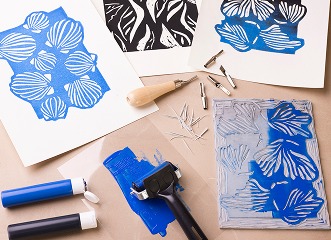
Handmade art on your own walls — that is the whole idea. Carve a lino block, roll on the ink and press: every print carries the small imperfections that make it yours. Here you will find the four techniques we love most (lino, block printing, gel plate and cyanotype), the tools behind them and the boxed kits that get you printing tonight.
Which printing plate should I use?
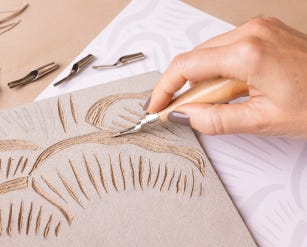
Traditional linoleum is made from linseed oil and natural fillers. It has a firm, slightly resistant feel, is carved on one side, and gives the crisp, graphic edge that classic lino prints are known for.
Our soft stamp blocks are lighter and much easier to cut — both sides can be carved and printed, which makes them perfect for a first attempt, for children and for workshops where everyone needs a result in one sitting.
Start here — block printing in a box
Plate, carving tools, ink, roller and paper, with step-by-step instructions. Everything you need for your first print run.
A unique print, every single time
The gel plate is a soft, flexible plate of synthetic gelatine. Roll paint across it, lay down leaves, bubble wrap, lace or torn cardboard, press your paper on top — and lift a print that can never be repeated exactly.
It works with every type of paint except oil-based, it builds beautifully in layers, and it wipes clean and goes straight back to work. If you want the fastest possible route from blank paper to something you would actually frame, start here.
Gel printing tools and group kits
Plates, rollers and paint sets — plus group boxes sized for a workshop table.
Graphic paper art for the wall
Cut, layer and hang. Quiet, graphic pieces that look at home above a sofa or a work desk.
Prints made by the sun
Cyanotype is an old photographic technique that has come back with force: two iron salts, water, sunlight — and deep Prussian blue images appear where the light falls.
Print on paper, wood or fabric and use leaves, flowers, stencils or stickers as your design. Mix the salts with water and rest them for 24 hours before use, mix 1:1 when you print, wear gloves, and let the UV do the rest.
Creativity in a Box with cyanotype
Why art prints became the new creative trend
In a world of mass-produced decor, people want walls with a story. Linocuts, block prints, gel prints and paper art each carry their own handwriting — the pressure of the roller, the grain of the plate, the slight offset of a second layer.
It is also one of the most repeatable creative habits we know: one plate can be reprinted in different colours all year, on cards, gift wrap, tote bags and framed pieces.
Lino block or soft stamp block?
Choose a soft stamp block if it is your first cut, if children are involved, or if you want to carve both sides. Choose traditional lino when you want the crispest lines and a firmer resistance under the tool.
What paint works on a gel plate?
Any water-based paint — acrylics work beautifully. Avoid oil-based paint. Clean the plate with a damp cloth and it is ready for the next print.
Can I print on fabric?
Yes. Use textile paint for block and gel printing, and the textile cyanotype kit for sun prints on cotton and linen.